

From the Margins | Issue 11
Discover 7 powerful Asian American Substack writers covering activism, healing, social justice, culture, and community stories

Periphery is a publication dedicated to fostering greater understanding and appreciation of Asian cultures and experiences among a global readership. Subscribe to Periphery to diversify your reading and discover unique writing.
Do you have news you’d like included in next month’s issue? Email me at tiffany (at) peripherylit (dot) org by April 20, 2025.
Welcome back to another issue of From the Margins, where we share stories, articles, and poems from our very own Periphery members.
AN APPLICATION FORM / BURNING HAIBUN FOR REINCARNATION
— E R Skulmoski writes of is & was
As someone with a complicated relationship with my own mother, this poem was both painful and cathartic to read. E.R. brings to light the intergenerational wounds that can pass on from mother to child. Sometimes it is an attempt at protection; sometimes it is a dagger.
In “An Application Form / Burning Haibun for Reincarnation,” she writes:
The slippery [moon / god] emerged out of [her stomach / the waves]
and she vowed to repay [eye / scar] for [eye / scar] and [tooth / blood] for [tooth / blood].
With her heavy breathing and screaming, she demagnetized the [ocean / room], and I left her womb to cleave to her wound.
There is acknowledgement of former generations’ pain, but not dismissal. I found this achingly beautiful.

Surging Spring Qi: Ride the Wave
— Jiling Lin, LAc writes Earthbody
Spring is upon us, and Jiling leads us in her newsletter by helping us attune to our bodies and the earth, and engage all our senses. I find this increasingly important for myself during a time of turmoil, and I was grateful for come across Jiling’s spring edition. It’s so uplifting and encouraging. She gives small and practical ways to take in the season, drawing from elements and seasonal nodes.
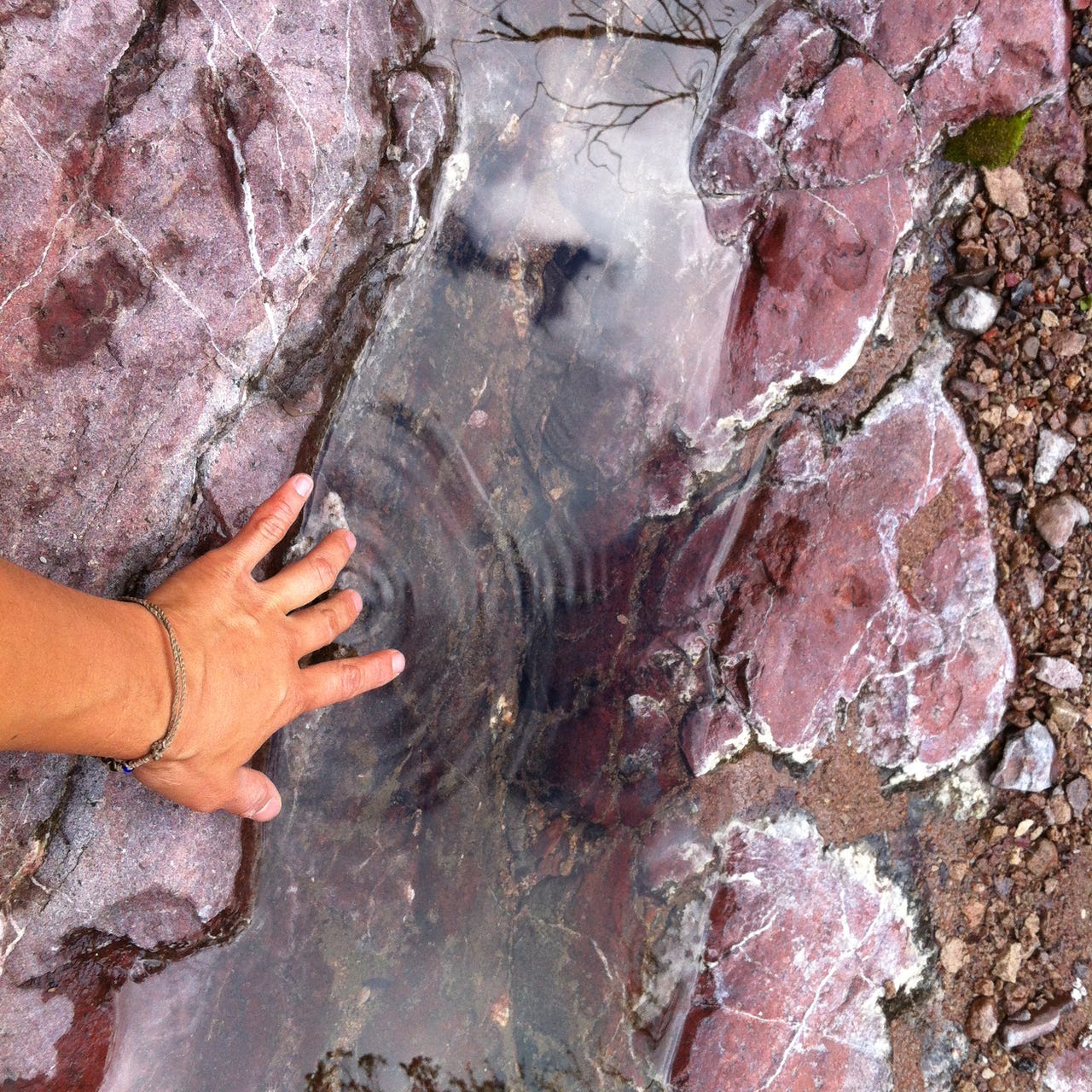
Spring has a ripping-apart sensation. Buds tear off their winter coats to explode neon-green leaves, bulbs press through cold dirt to send brave flowers skyward, and the whole world pushes and pulses, lifting leaves and flowers, baby hummingbirds and bunnies to the sun, “Look! Here I am! I am alive.”
Reading Su Shi: An Ant Clinging to A Small Plant Floating on Water
— Hyun Woo Kim writes Request of Literary Exile
I admittedly have limited knowledge of classic Chinese literature, despite my heritage. As such, this article by Hyun Woo about poet and essayist, Su Shi, was a delight to read. Exiled literary geniuses intrigue me (see: my fascination with Victor Hugo), so when I read this about Su Shi, I was captivated.
Truly, we all reside on an island of one’s own. All we can see is a large sea, the end of which cannot be grasped. We feel lost, and it seems life is not going anywhere. On a different scale, however, the water is nothing but a tiny puddle, formed by the water from a basin. Why not just laugh about it, then? Look up, look down, and it will have dried in no time.
For those of us who call ourselves artists, we sometimes (often) struggle with wondering what the point of our work is. Hyun Woo writes about his own journey in this essay as well. There was a lot I found relatable, and reminds me how closely entwined we still are, even with people of the distant past.
Teaching from Rest
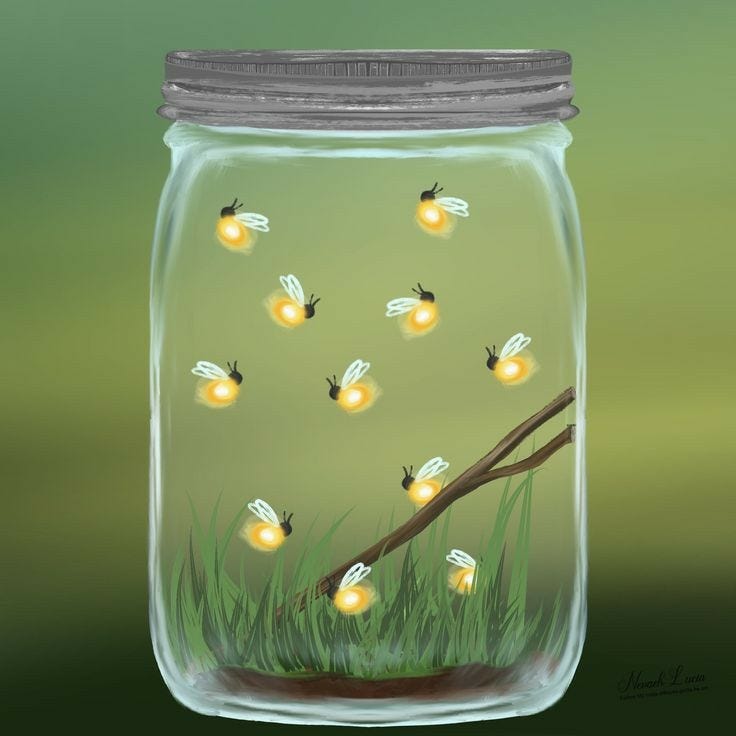
— Zahra. G writes Fireflies in a Jar
I really appreciated this reflection on homeschooling by Zahra. As a homeschooling mom myself, I’m often frazzled and stressed by questions of whether or not my child is keeping up with his peers, whether he’s getting enough socialisation.. etc. There came a moment a few months ago when my husband and I considered whether this was truly the right choice for our family. We decided it was, after all. Zahra wrote about many of the reasons we talked about in her post. It’s beautiful to read about her letting go of societal expectations and choosing to rest.
For anyone who has children, I highly recommend reading Zahra’s post.
And the most important lesson that reiterates throughout this beautiful book is that “we are meant to recognize every facet of our day as coming from the hand of God”.
What that essentially translates into is trusting Allah swt and his decree. My kid might not feel like touching a book today, me nagging him, hovering over him all the time will not change his feelings toward learning today. But being patient, accepting and accommodating of his need to lay back may result in him grabbing a book first thing the next morning or maybe not for another few days. What is key to teaching from rest is our faith in Allah’s divine wisdom and that we remember to rely on him completely. All of the above lessons apply to parents and care givers who choose the traditional education route as well, because a child’s true education begins at home.
When was the last time you looked up?
— Cissy Hu writes becoming | more myself
It’s always a good time to remind yourself to slow down and take in your surroundings more. In this essay, Cissy writes beautifully of a poignant moment between herself and a heron during a time of transition. It can be all too easy to focus on the troubles of today—look down, as Cissy puts it—rather than keeping a broader perspective in mind. The problems can then loom bigger and overwhelm us.
Cissy’s reminder to take a step back and reconnect with your larger purpose is a timely one. I hope you will enjoy reading it, too.
Reorienting toward the horizon is a daily practice. Setting intentions while remaining open to how the path unfolds before us, trusting that the next right step will reveal itself.

Where do we go from here?
— Erika Tovi writes nōto
I appreciate Erika’s stark honesty here, and her refusal to conclude with a pat resolution to suffering—because real life often doesn’t offer tidy solutions. And yet, she gives the reader something else: gentle reminders that while evil seems overwhelming, to look for the good. Which is a deeper reminder that there still is good in the world. Or, as Mr. Rogers would say, “Look for the helpers.”
In dark times, I’m more grateful than ever for messages like Erika’s, which are not simple. She doesn’t dismiss the bad. She instead challenges us to look for something higher. And, of course, I can never resist a good Lord of the Rings quote, even if it’s not from the book. Thank you, Erika.
If goodness means something—anything at all—to us, then we must refuse to let go of it. Naming what’s good out there can be a whale-sized effort. It can seem like everything is doomed, and that’s that. But examples such as the Minneapolis neighbors providing for and protecting each other prove that goodness persists in the world. We might just be everyday people, but we get to choose if (and hopefully how) we overcome evil and power and corruption.

How I found my way to my faith as a ‘bad’ Muslim woman
— Sanobar Sabah writes Sanobar’s Newsletter
Sanobar’s essay resonated with me on many levels, especially as I’m working through my own faith reconstruction journey. While we don’t share the same faith, I believe everyone has a faith, and at one (or some) point(s), we must question why we continued to adhere to it.
I’ve also been the rebellious girl who drove her parents mad by questioning why we had to do certain things, pushing back against traditions that no longer made sense, and congregations that made little to no space for those who don’t perfectly fit the limited mold created for them.
My writing offered me clarity in confronting my conditioning, providing me space to rage against patriarchy. It attracted compassionate engagement from people of diverse backgrounds, most surprisingly by my Muslim female friends, many of them hijabis. Suddenly, we were on the same side – tolerant of our nuanced personal experiences – resisting, questioning and reclaiming faith in our own ways!
It’s so refreshing to read about others who find freedom within a faith they once found restricting.

This issue of Periphery features was curated by Tiffany Chu of The Untangling. If you enjoyed these picks, be sure to subscribe to her publication.
Want to write for us?
Featured writer — Submissions are open on a rolling basis with no theme. Even if you’ve submitted previously, I encourage you to do so again, because I’m now opening it to writing pieces that have been previously published on personal blogs or Substacks. Full guidelines can be found on this page. Payment: $10 upon publication.
Curator — no limit: Sign up to curate one of the monthly round-ups (like the one you just read!). There are different ways to do this. You can either look through the Periphery directory and read posts you want to highlight, or highlight posts by Asian authors you already subscribe to. This page has our past editions if you need a reference. Sign up for an upcoming month here. Open to Periphery members.
Decolonise Your Bookshelf series — no limit: If you love books and also love recommending them to others, sign up to write one of these posts. This is one of my favourite things to do and would love to hear about more books by Asian authors from y’all. Check out this page for past issues. Open to paid subscribers.
To keep this work sustainable, please upgrade your subscription or give a one-time donation. This is incredibly important so that I’m able continue this work. Financial support directly impacts how much time I’m able to devote to this publication. Thank you!
Thank you, Young Woong Yi, Andrea Louie, Bill Bishop, Demian Yumei, TheUltraContemplative, sunshine moonlight, Lael Johnson, Sanobar Sabah, for your generous support.
Thank you for sharing, Tiffany!
Thank you for including my work 💕